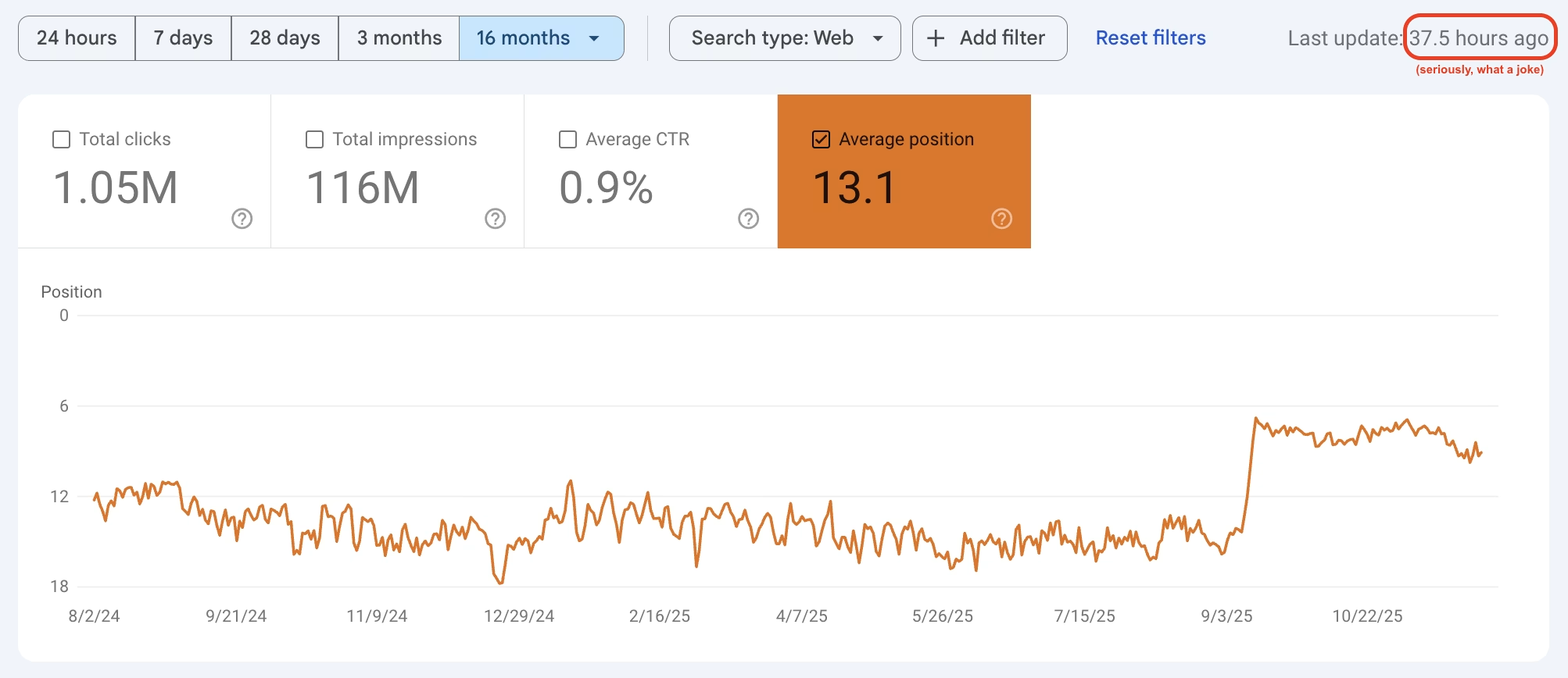
Unsolicited SEO post: I’ll explain why no individual or agency should take credit for the rank improvement we can all witness in the Google Search Console. To do so, I have to explain step by step why this is entirely artificial.
1. Google recently deprecated the &num=100 URL parameter, which was a method used primarily by scrapers and SEO tools to view up to 100 search results on a single page.
2. This decision had a direct impact on the Google Search Console data collection (the historical data used to be noisy because of scrapers).
3. This dropped parameter used to cause an artificial inflation of impression counts, as a URL ranking at position 90 would get an impression recorded even if a real human user never scrolled past the first few results. At times, only bots were watching the SERPs!
4. With the parameter’s removal, Google results are now paginated for all queries, meaning an impression should only be counted when a URL appears on a page a user actually views.
5. This has led to the drop in total impressions for many websites (not just yours), but each impression now represents a more accurate measurement of actual user visibility.
That’s the theory 😅
❌ PROBLEM: in some instances, Google manipulates the data you see in the Search Console. That’s why some of you see click and impression graphs that don’t make any sense.
6. Before the removal of the &num=100 parameter, low-ranking pages (positions 30-100) were rarely seen by users but were receiving impressions from automated tools (scrapers).
Previously, when scrapers used the &num=100 parameter, they would load a single page with 100 search results. This meant that if your pages ranked at position 5 and also at position 95 for the same search query, both of these positions would be recorded as having received an impression.
And when Google calculated your average position for that query, it would average both of these rankings. Now, without the &num=100 parameter, search results are “paginated”, showing 10 results per page (usually).
7. Real human users are far more likely to see the result at position 5 on the first page than they are to navigate to the tenth page to see the result at position 95. Therefore, the lower-ranking positions are much less likely to receive an impression.
8. For now, most scrapers are “blocked” and when Google calculates your average position for a query, it no longer averages both of these rankings: only the top position seen by a real user is counted.
That’s WHY your rankings improved so significantly.
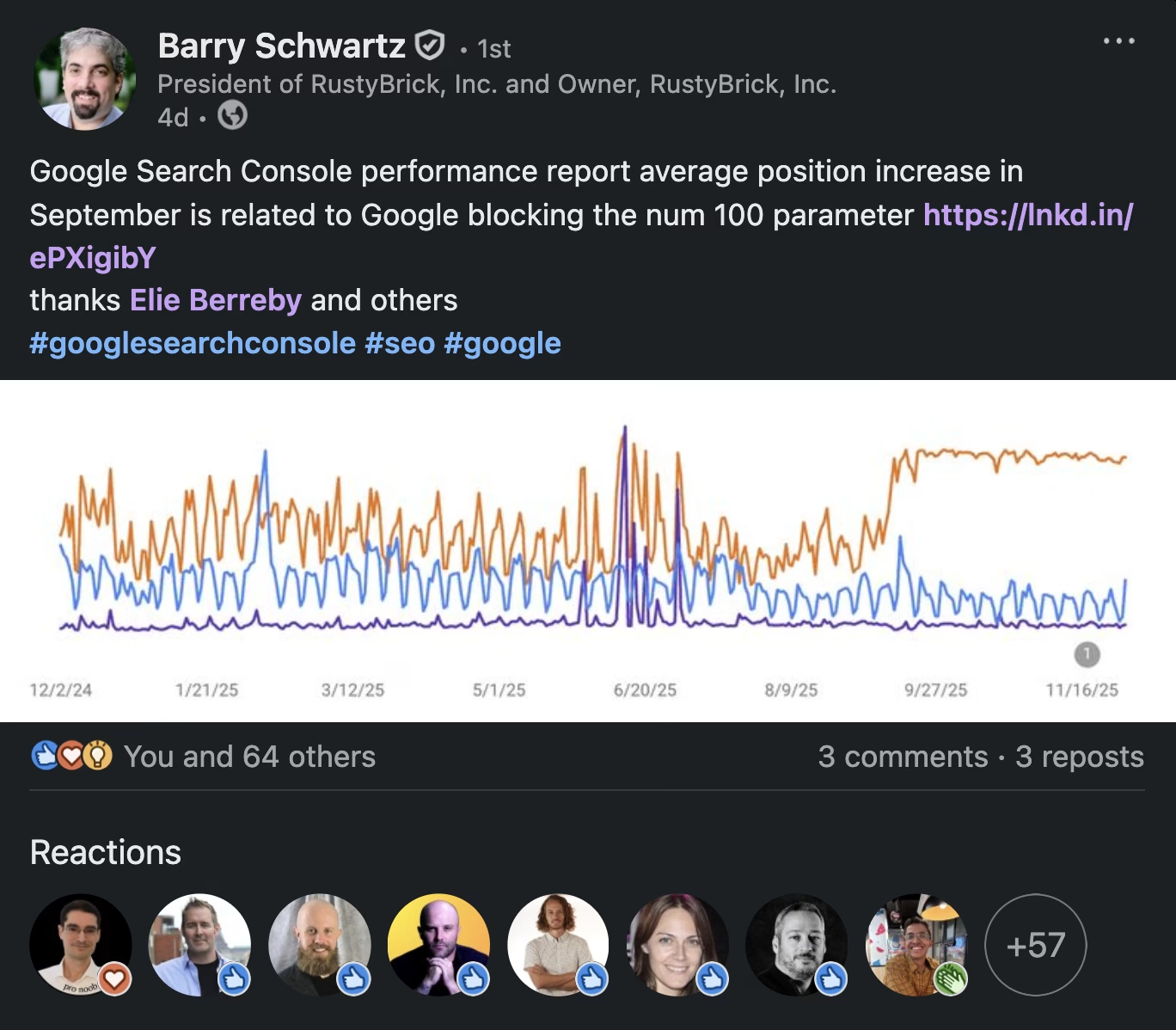
UPDATE 1: Barry Schwartz who asked the question that pushed me to post the answer thanked me publicly in this short Linkedin post:
Update 2: This fake, self-proclaimed “SEO expert” stole my content and thought tagging me would make it acceptable… 👀
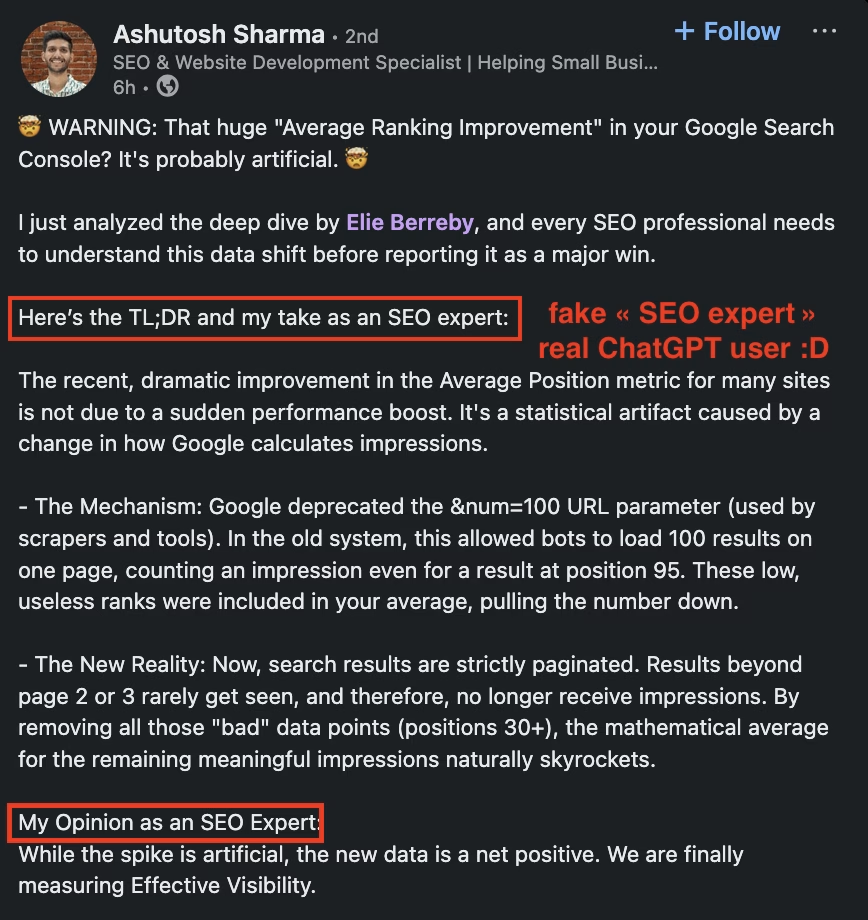
Apparently, he not only used ChatGPT to rewrite my text, but also to artificially modify the real GSC graph I used! Scammers want to appear better than they really are. Of course, he had to increase the KPIs:
– 216 million clicks
– 1.91 billion impressions
– an average CTR of 11.3%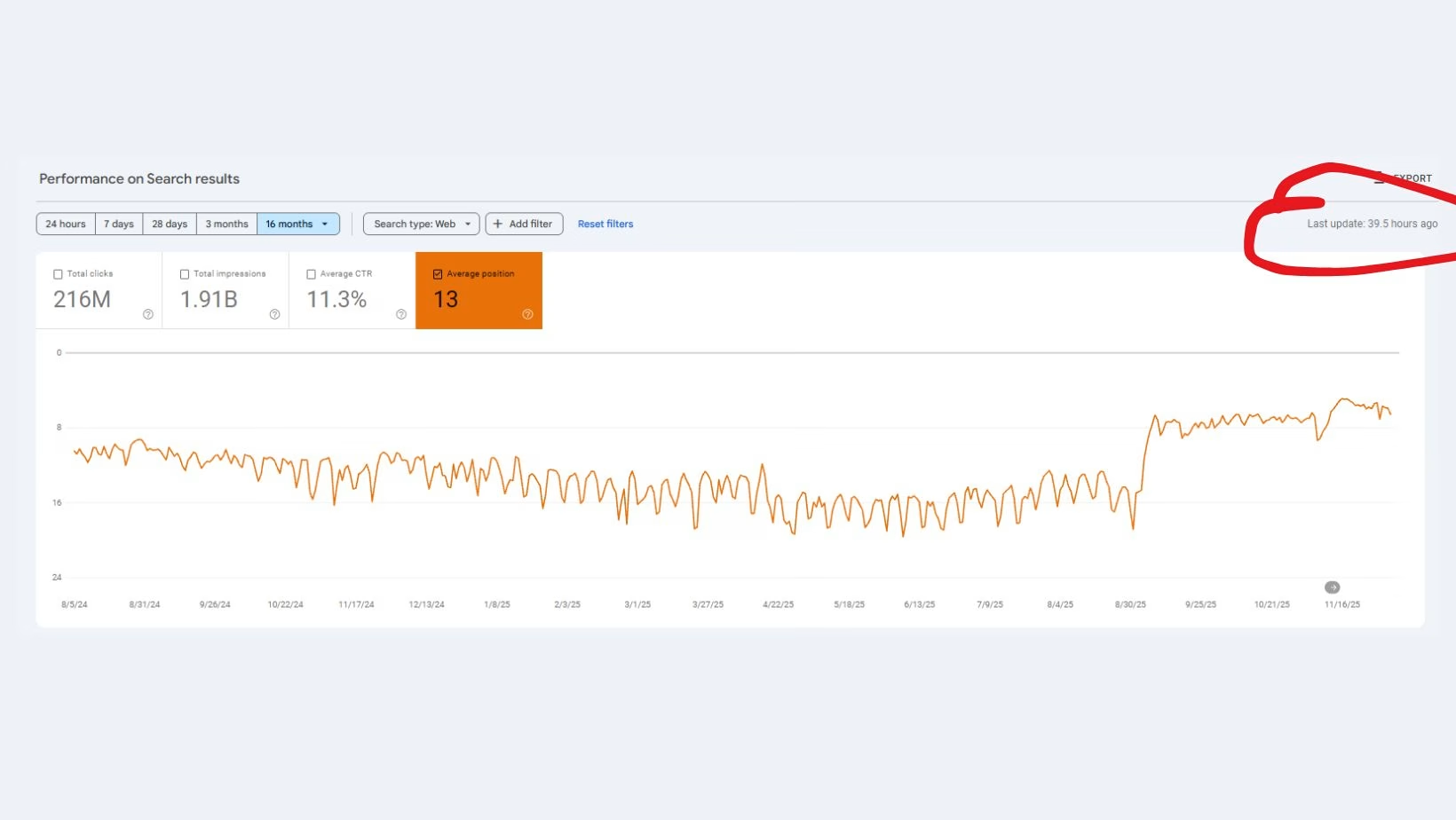
Notice how he also added 2 hours at the top to keep my remark! He does not even seem to understand that by stealing content on a professional network, he destroyed his own credibility. Nobody had to do it for him.
The result? I just filed a Notice of Copyright Infringement. And of course, I permanently blocked him.
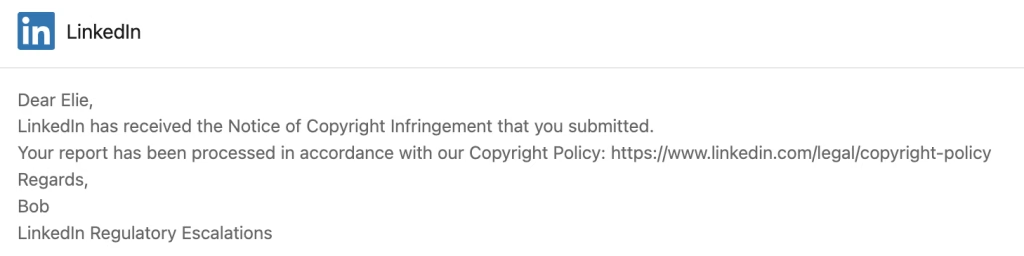
UPDATE 3: Linkedin processed my copyright infringement report and removed the stolen post. Don’t steal content.